
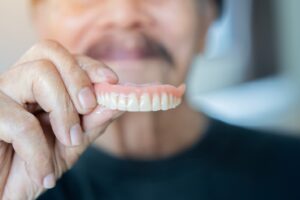
You’re about to receive your new dentures, which means you’re eager to see a fully restored smile. But did you know that most patients go through an initial adjustment phase? The first month can be tricky because your mouth needs time to get used to these new teeth, but if you keep reading, you’ll learn how to make this transition to a full, complete smile easier and more seamless.
Initial Soreness Will Go Away
Once your dentist is satisfied with your denture fit and gives you the “all clear” to start enjoying your new smile, you may notice some slight soreness for a few weeks. This is normal. Your mouth, specifically your bone, gums, tongue, and any existing teeth, need time to adjust. If you notice the pain worsens over time, call your dentist to schedule a visit and have them recheck the fit.
You’ll Need to Practice Speaking
It’s common for patients to develop a lisp when they receive dentures for the first time. Not everyone experiences this, but if you do, don’t be alarmed. Your tongue and teeth must work together to speak clearly. Practice talking slowly or read a book aloud. The more you do it, the quicker your lisp will fade, and you’ll start to sound like yourself again.
Clean (and Soak) Your Dentures to Keep Them Healthy
Your dentist will likely tell you to wear your dentures full-time during the first 24 hours, but afterward, you’ll need to take them out to soak overnight. Dentures accumulate bacteria, saliva, and food particles throughout the day, so keeping them clean is essential. Morning and nighttime brushing, rinsing after meals, and soaking them while you sleep in a denture cleaner will ensure they remain fresh and odor-free each day.
Learn to Eat the Right Way
Dentures may help expand your palate, but learning to eat while wearing them takes patience and persistence. Why? You must learn to chew with both sides of your mouth. Initially, you’ll need to stick to soft foods until your mouth is no longer sore and you feel ready to try denser options. Once you start incorporating firmer textures, you may find it easier to cut them up into small pieces for easier consumption. When chewing, don’t rush; slow down so your dentures don’t shift or pop out of place.
Don’t be deterred by what you can expect during your first month with dentures. The adjustment phase is short. Before you know it, your dentures will act and feel like your natural smile, but if you experience any issues, call your dentist. They’re here to help ensure your new teeth feel and look their best.
About the Author
Dr. Alec Starostik owns Centre Smiles Dental and earned his dental degree at Temple University Kornberg School of Dentistry. He maintains a great rapport with his patients by offering transparent dental care, including explaining what they can expect when first receiving dentures. He and our team are always ready to answer questions and offer tips to make transitions easier, so if you would like to learn what life will be like with these prosthetics, visit our website or call (814) 826–3767 to schedule an appointment.