
Gum Disease Treatment State College
Preserving Smiles with Effective Gum Disease Treatment

Periodontal disease, better known as gum disease, is one of the most common dental problems in the entire world. In fact, the Centers for Disease Control and Prevention estimates that 4 in 10 adults in America are struggling with this infection. That’s why our team at Centre Smiles screens your gums every time you come to see us! So, if it has been more than six months since your last visit, contact us today to schedule your routine checkup and cleaning.
Why Choose Centre Smiles for Gum Disease Treatment?
- Precise Diagnoses with Advanced Dental Technology
- We Accept & Maximize Dental Insurance
- Dentist Committed to Continuing Education
What is Gum Disease?
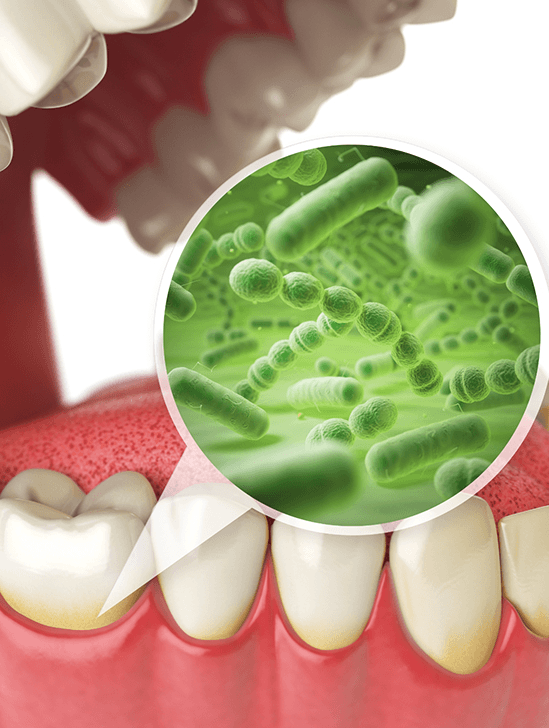
In short, gum disease is a bacterial infection. In the early stages, the symptoms are relatively minor. However, if left alone to progress, it can lead to tooth loss and increase a person’s chances of suffering a heart attack or stroke. For this reason, we strongly recommend committing to a solid oral hygiene regimen at home and coming to our office every six months for an exam. That way, we can catch and treat gum disease as quickly as possible.
Symptoms of Gum Disease
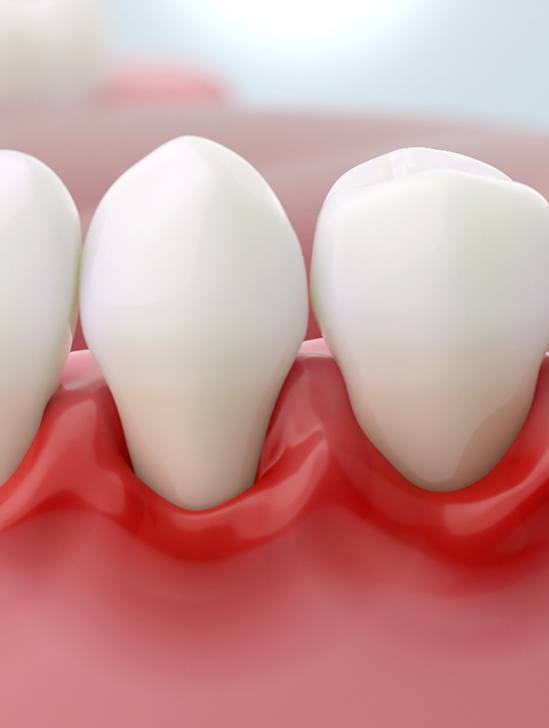
As we mentioned above, the symptoms of gum disease are usually relatively mild in the early stages (i.e., red gums, persistent bad breath, bleeding when you floss). However, over time, plaque and tartar buildup allow bacteria to irritate your gums, causing them to recede, separate from the teeth, and expose the roots. As a result, pockets can form and trap more plaque and food particles, which allows the infection to spread to your jawbone and the supporting tissue. So, if you notice anything unusual, don’t wait – contact us today for periodontal therapy in State College.
How Do We Treat Gum Disease?

If we spot any signs of gum disease, our usual first line of defense will be a scaling and root planing treatment. This is sometimes referred to as a deep cleaning, and it can be thought of as a dental cleaning that is specifically aimed at treating the gums. If you are interested in learning more about it leading up to your appointment, read on!
Scaling & Root Planing
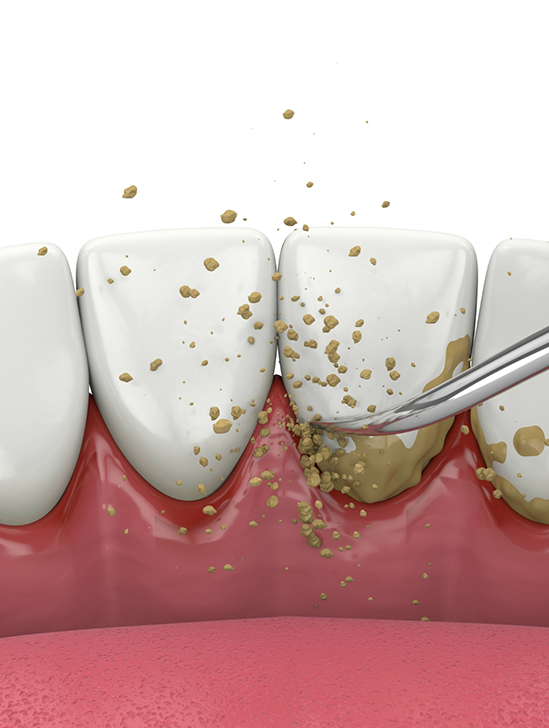
After numbing the area intended to be treated, your hygienist will use an ultrasonic cleaner to break up and clear away any plaque or tartar deposits located around your gum line. Then, we’ll gently smooth out the roots of your teeth. This will make them less likely to gather plaque that could lead to reinfection. Depending on the extent of your gum disease, a complete scaling and root planing treatment can be completed over the course of a few visits. Afterward, you’ll be advised to visit us more often for regular dental cleanings in order to make sure your gums remain healthy as you heal.
Do I Need Scaling & Root Planing?

To figure out if scaling and root planing is right for you, we first need to complete an examination of your gums. Z-rays are also taken to collect as much information as we can. Depending on the current state of your gum tissue, the depth of the pockets, and the progress of your gum disease, we might recommend scaling and root planing to keep your gum disease at bay.
The Process of Scaling & Root Planing
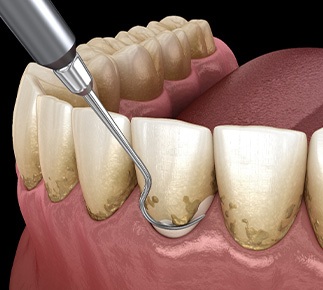
The complete scaling and root planing process is usually completed over the course of two appointments, but this can vary from patient to patient. To remove plaque and tartar, we begin by scaling the teeth with dental tools. We will target the gumline and underneath the gumline where plaque, tartar, and bacteria build up.
After the scaling portion is complete, we will move on to the root planing portion of the treatment. This is when we smooth down sections of the teeth beneath the gumline. This helps the gums adhere to the teeth, speeding up the healing process by making it more challenging for bacteria to build up later.
Aftercare Tips for Scaling & Root Planing

It is normal for the gums to feel a little bit sore after scaling and root planing. There may also be some inflammation in those areas. This is temporary and should subside over the next few weeks. Here are some tips to help the healing process go as smoothly as possible.
- Brush twice daily with a soft-bristled toothbrush and fluoridated toothpaste
- Rinse your mouth with saltwater after meals
- Floss every day
- Stick to a soft diet following your treatment
- Avoid foods and beverages that are spicy, acidic, and hot
Gum Disease Treatment FAQs
How common is gum disease?
It’s actually far more common than most people realize. The Centers for Disease Control and Prevention (CDC) estimates that 4 in 10 adults in the United States are living with some form of gum disease. The worst part is that many harbor gum disease for weeks without knowing it.
The infection tends to develop discreetly, with symptoms mild enough to go unnoticed until it's already progressed. That's why Dr. Starostik screens your gums at every visit, not just when something feels wrong. If it's been more than six months since your last checkup, come see us. Early detection makes gum disease treatment in State College significantly simpler and more successful.
How long does gum disease treatment take?
It depends on how far the infection has progressed. When gum disease is caught in its earliest stages, it may respond well to more frequent professional cleanings and better home care habits. However, more progressed infections typically need deeper cleaning to make them more manageable.
At our practice, we use scaling and root planing—a deep cleaning procedure that clears bacteria from below your gum line and smooths the tooth roots to discourage reinfection. Depending on the extent of the disease, this treatment may be completed over two or more visits. Afterward, more frequent maintenance cleanings are usually recommended to watch your gums as they heal and prevent the infection from returning.
Does gum disease ever go away?
The earliest stage, gingivitis, can often be fully reversed with simple treatment and a consistent home care routine. Once it advances to periodontitis, however, the goal shifts from reversal to long-term management.
The infection can't be completely eliminated at that stage, but it can absolutely be controlled. With scaling and root planing and a committed maintenance schedule, Dr. Starostik can help stabilize the infection and protect your remaining teeth. Many patients with periodontitis go years without further complications, but proper care is required to ensure success for your smile.
Is there a connection between gum disease and other diseases?
There’s a growing body of research that suggests this is true, and it's one of the more important reasons to take gum disease seriously. Studies have linked untreated periodontal disease to an elevated risk of heart disease, stroke, diabetes complications, and respiratory illness.
While the exact mechanisms are still being investigated, the consensus in the scientific community seems to involve bacteria from infected gum tissue. These bacteria enter your bloodstream and trigger inflammation throughout your body. If you’re concerned about bleeding gums or other symptoms, reach out to us and schedule your first visit.