
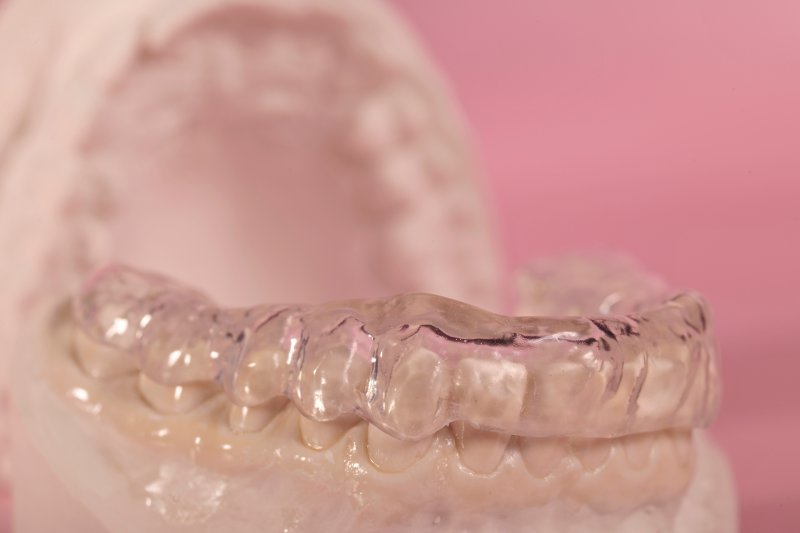
Sleep apnea is a frustrating and potentially dangerous health condition that can disrupt sleep more than a hundred times in a single night in severe cases. While many people associate sleep apnea treatment with CPAP machines, many dentists prefer to treat the problem with noninvasive oral appliances that are incredibly easy to use. Here’s a quick look at how oral appliances work and how you can keep your device clean and functional.
How Do Oral Appliances Work?
Sleep apnea is characterized by the tissues in the neck such as muscles and fat deposits weighing heavily upon the windpipe when they relax during sleep. This can cause the windpipe to constrict and cut off airflow, which will cause the sleeper to awaken suddenly and out of breath. Oral appliances help prevent this by shifting the jaw into a forward position that makes it more difficult for the airway to become blocked. These devices are simply worn over the teeth (similarly to a retainer or an athletic mouthguard) when the patient sleeps and involve no hoses or noise.
How Can I Keep My Oral Appliance in Great Shape?
To keep your oral appliance in excellent condition, stick to the following rules:
- Practice excellent oral hygiene: Thoroughly brushing and flossing before inserting your oral appliance for the night will help prevent it from developing nasty accumulations of plaque, tartar, and food debris that can smell bad, cause unsightly stains, and gum up its moving parts.
- Brush your appliance daily: Using a soft-bristled toothbrush or denture brush, gently clean your device using a mild detergent such as unscented hand or dish soap. Carefully scrub all the appliance’s sides and crevices including the advancement mechanism if present. Avoid using hot water since it can cause your appliance to warp and ruin its fit.
- Soak or air-dry: Your dentist will instruct you as to how to properly store your appliance when not using it. If you are to air-dry it, gently shake excess moisture off it after cleaning and store it in its case with the lid open so the rest of the water can evaporate. If you are to soak your appliance, submerge it in clean water using a clean container when not in use.
- Clean your storage box: About once weekly, thoroughly clean your appliance’s storage container using soap and water. Then, dry it off with a cloth or paper towel.
It’s also important to have your appliance inspected by an oral health professional at least once annually to make sure it is still in working order. Your device may last for years if it receives proper care and maintenance.
About the Author
Dr. Alec Starostik earned his degree at the Temple University Kornberg School of Dentistry and is a proud member of the American Dental Association and the American Academy of Dental Sleep Medicine. His office in State College offers general, restorative, cosmetic, and emergency dentistry as well as sleep apnea treatment. To learn more about oral appliance maintenance, contact the office online or dial (814) 826-3767.